
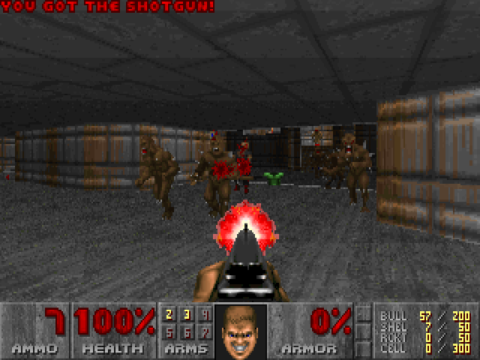
The soundtrack for DOOM has earned a major place in gaming history with its addition to the United States Library of Congress National Recording Registry. That recognition puts it alongside a very small group of video game works that have received the same honor, highlighting just how influential this music has been not only within games, but across popular culture as a whole. For many players, the announcement feels long overdue. The music of DOOM has been inseparable from the game’s identity for decades, helping define the mood, pace, and attitude of one of the most important releases in the history of the medium.
Originally composed by Bobby Prince in 1993, the soundtrack became famous for its aggressive energy and unforgettable hooks. Even with the technical limits of early 1990s hardware, Prince created music that felt loud, dangerous, and perfectly matched to the game’s relentless action. The result was a score that pushed players forward through every corridor, firefight, and demon encounter. It did more than provide background noise. It became part of the gameplay experience itself, amplifying tension and making every battle feel bigger and more intense.
Part of what makes the soundtrack so memorable is the way it channels the spirit of heavy metal and hard rock while still working within the constraints of game audio technology at the time. According to information shared by the Library of Congress, Prince drew inspiration from a stack of CDs provided by game designer John Romero, including music from bands such as Alice in Chains, Pantera, and Metallica. That influence can be heard in the soundtrack’s driving rhythms, dark tone, and rebellious edge. Rather than simply copying those sounds, Prince translated that energy into something uniquely suited for interactive entertainment.
This achievement also speaks to how far game music has come in terms of cultural recognition. For many years, video game soundtracks were often overlooked when compared with film scores, television themes, or mainstream albums. Yet players have long known how important music is to the experience of a great game. In the case of DOOM, the soundtrack is one of the clearest examples of audio elevating a title from memorable to legendary. Its tracks are still discussed, remixed, covered, and celebrated by fans around the world, proving that their impact has lasted well beyond the era in which they were created.
The game itself was already a landmark release. DOOM helped shape the first-person shooter genre and influenced countless developers who followed. Its fast movement, atmospheric level design, and intense combat made it a phenomenon. The soundtrack played a huge role in that success. Without those pulse-pounding compositions, the experience would not have felt quite the same. The music gave the action a fierce personality, reinforcing the sense that players were charging headfirst into chaos and surviving through sheer momentum.
Recognition from the Library of Congress is especially meaningful because the National Recording Registry exists to preserve works that are considered culturally, historically, or aesthetically significant. For a game soundtrack to be chosen means it has crossed beyond fandom and entered a broader conversation about art and media history. Reports indicate that the DOOM soundtrack was selected from thousands of nominees, making the honor even more impressive. It is a reminder that game music deserves preservation and study just as much as other influential recordings.
Bobby Prince’s work stands as a testament to creativity under limitations. Using the tools available at the time, he built a soundscape that remains instantly recognizable. That staying power is rare in any medium. Players who experienced DOOM in the 1990s still remember the music vividly, while newer audiences continue to discover why it became so iconic. Few soundtracks can claim that kind of cross-generational appeal.
The induction of the DOOM soundtrack into the Library of Congress is more than a celebration of one classic game. It is also a win for video game music as an art form. Honors like this help validate the role composers have played in shaping the emotional and cultural legacy of games. For fans of DOOM, it is a satisfying acknowledgment of something they have known for years: this soundtrack is one of the all-time greats.
With this recognition, the legacy of DOOM grows even stronger. Its gameplay changed the industry, and its music helped define an era. Now, that soundtrack has secured a permanent place in America’s recorded history, ensuring that future generations will understand just how important it was.

Leave a Reply
You must be logged in to post a comment.