
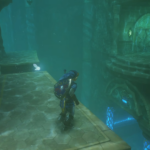
Nintendo has opened up about how it reworked one of the most infamous dungeons in gaming history for the remake of The Legend of Zelda: Ocarina of Time. The Water Temple has long been remembered as a major stumbling block for players, not just because of its layered puzzle design, but because navigating it could be confusing and cumbersome. For the remake, Nintendo’s goal was not to strip away what made the dungeon memorable, but to smooth out the parts that made it frustrating.
In comments from members of the development team, Nintendo explained that the philosophy behind the remake was to preserve the original dungeon mechanics while improving overall playability. That meant keeping the Water Temple’s identity intact, including its shifting water levels, interconnected rooms, and puzzle-heavy structure, while making it easier for players to understand where to go and what to do next.
Eiji Aonuma, who worked on the original version of Ocarina of Time in the late 1990s, spoke candidly about the dungeon’s reputation. He described revisiting the Water Temple as a chance to address what he saw as unfinished business from decades ago. The dungeon became famous for its difficulty, and much of that came from how easy it was to lose track of your location, your objective, and even your orientation within the space. For many players, the challenge was not simply solving puzzles, but dealing with the friction of the dungeon’s design.
One of the biggest issues in the original release was item management, especially when it came to the Iron Boots. Players frequently had to pause the game, enter menus, equip or unequip the boots, and then continue exploring. This constant interruption broke the flow of the dungeon and made an already demanding area feel even more tedious. In the remake, Nintendo has streamlined that process, allowing players to remove the Iron Boots instantly without repeatedly diving into the equipment screen. That single quality-of-life improvement could dramatically change how the Water Temple feels to play.
The team also made environmental adjustments to help players read the dungeon more naturally. Rather than redesigning the temple into something simpler or more linear, Nintendo focused on visual clarity. Objects were placed in ways that subtly guide players toward the correct direction. Some areas of the layout were altered slightly so that progression feels more intuitive. The idea was to help players understand the space through observation instead of forcing them to rely on trial and error.
Another notable change involves the temple’s walls and room visibility. In the original version, certain enclosed spaces made it easy to become disoriented. The remake replaces some of those more confusing barriers with lattice-style structures that let players see into adjacent rooms. This gives a better sense of the dungeon’s overall layout and helps players mentally map the environment as they move through it. It is a smart compromise that preserves the temple’s complexity while reducing the sense of being trapped in a maze.
Guidance tools from previous versions are also returning. Visual cues such as wall lights that point players toward important water-level controls are back, helping reduce the guesswork involved in progression. These additions do not remove the need to think carefully, but they do make the dungeon feel fairer. Players still need to solve the temple, but they are less likely to get stuck because they overlooked an obscure detail or lost track of a key route.
Aonuma also reflected on the original creative intent behind the Water Temple. When it was first designed, he wanted to capture the unique feeling of being underwater in a 3D game. At the time, that was a relatively fresh concept, and the team wanted the dungeon to feel distinct from everything else in the adventure. The shifting acoustics, unusual movement, and unfamiliar atmosphere were all part of creating a memorable underwater experience. That ambition remains part of the remake, but now it is supported by design changes that make the space easier to understand.
What makes this update especially interesting is that Nintendo did not simply lower the difficulty. Instead, it identified the difference between meaningful challenge and unnecessary friction. The Water Temple’s puzzles, structure, and identity remain central to the experience, but the remake appears designed to ensure that players are challenged by the dungeon itself rather than by awkward menu navigation or poor readability.
There is also a strong sense of nostalgia surrounding these changes. The Water Temple has become a shared gaming memory for an entire generation, often brought up as a symbol of old-school difficulty and player perseverance. Nintendo seems aware of that legacy, and the remake may create a fun contrast between longtime fans who remember struggling through the temple and newer players who encounter a more polished version. That generational comparison could become part of the remake’s appeal, especially for families sharing the game together.
In the end, Nintendo’s approach suggests a careful balancing act. The company wants to honor a beloved classic without being trapped by every rough edge of its original design. By refining navigation, improving visibility, and streamlining item use, the remake’s Water Temple could finally deliver the experience its creators originally intended: a memorable underwater dungeon that feels clever and immersive rather than exhausting. For fans who have waited years to see this legendary area revisited, these updates may be among the most welcome changes in the entire remake.
Leave a Reply
You must be logged in to post a comment.