
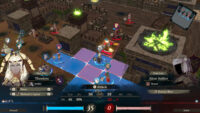
Nintendo has shared a deeper look at Fire Emblem: Fortune’s Weave through a dedicated Direct presentation, offering a clearer picture of the game’s setting, structure, and tactical systems ahead of launch. The upcoming strategy RPG is scheduled to arrive on Nintendo Switch 2 on September 17, 2026, and the latest footage highlights a blend of story-driven choices, time management, and classic Fire Emblem combat.
The adventure takes place in the Dagdan Empire on the continent of Dagda, a region located far to the southwest of Fódlan. The story opens at a catastrophic moment: the empire has fallen after the return of the demon god Balor. From there, the setup takes a dramatic turn. Sothis intervenes and sends the player’s soul five years into the past, creating a chance to prevent the coming disaster and alter the destinies of four heroes who vanished before the world’s collapse.
That time-travel premise forms the backbone of the narrative. Rather than simply fighting to survive in a ruined land, players are tasked with uncovering what went wrong and changing the course of history before Balor’s destruction becomes inevitable. The goal is not only to save the empire, but also to guide four key figures whose fates appear tied to the world’s future.
The story returns players to the Heroic Games, a major competition held in the imperial capital of Dagsion. According to the game’s lore, the winner of this event is granted a wish by Solel, the current ruler of the Dagdan Empire. This tournament framework gives the game a strong central setting while also serving as the point where the four main protagonists’ paths intersect.
Players can choose to fight as one of four heroes, each with a distinct background and motivation. Cai is a young boy from Riberia village who enters the conflict in hopes of saving his imprisoned father. Dietrich is a refined swordsman driven by a desire to test himself against powerful rivals. Theodora, queen of the Saramis Kingdom, seeks to restore the honor of her goddess. Leda, a musician with a painful past, is pursuing revenge against the person responsible for her father’s death. Together, these four leads offer very different perspectives on the same unfolding crisis.
One of the more interesting structural features is that players do not need to complete four entirely separate campaigns to see each character’s storyline. Instead, the game allows all four stories to progress in parallel through a location called the pale raven’s perch. That approach could make the narrative feel more interconnected while reducing the repetition often associated with route-based RPG storytelling.
Outside of battle, much of the gameplay revolves around preparation in Dagsion. Between major matches, players will spend time training units, finding and equipping better gear, earning class promotions, taking on quests, and building bonds with allies. These activities appear designed to give players flexibility in how they shape their army, whether they want to focus on raw combat strength, character relationships, or long-term class development.
The game also expands beyond the city hub. Players can travel across the world map to engage in skirmishes and explore dungeons that reward useful upgrade materials. These dungeons use a special turn-based encounter system, adding another layer to progression and resource gathering. However, time is limited. Moving around the map and taking part in optional activities causes time to pass, meaning players will need to think carefully about how they spend the days between key events. That time-pressure element could add meaningful tension to every decision.
Combat itself retains many of the strategic mechanics longtime fans expect from the series. Weapon matchups, unit strengths and weaknesses, terrain effects, and the importance of positioning all play a major role. Bonuses for adjacent allies also return, reinforcing the value of formation planning and coordinated attacks. These familiar systems should help the new entry feel grounded in Fire Emblem’s tactical identity even as it introduces fresh ideas.
Class progression is divided into three tiers: Beginning, Specialty, and Advanced. Units can take Certification Exams to unlock new classes, giving players multiple ways to customize their roster over time. This system suggests a steady sense of growth, with characters evolving from basic roles into more specialized and powerful battlefield options.
Several combat abilities also stand out. Combat Arts return, allowing units to unleash stronger attacks in exchange for weapon durability. Blaze Arts add another risk-reward option by consuming the hero’s own health points to power special moves. These mechanics should create difficult choices in battle, especially during longer encounters where every resource matters.
Another major tool is Fortuna’s Blessing, a time-rewind feature that lets players replay previous turns. For a series known for punishing mistakes, this mechanic offers a welcome safety net without removing the need for careful planning. It also fits neatly with the game’s broader themes of rewriting fate and correcting disastrous outcomes.
Based on the latest details, Fire Emblem: Fortune’s Weave looks like it is aiming to combine a high-stakes time-travel story with layered strategic systems and a more flexible multi-protagonist structure. Between its tournament setting, limited-time decision making, class advancement, and familiar tactical depth, it is shaping up to be one of the more ambitious entries in the series. Fans of strategy RPGs will likely want to keep a close eye on it as its 2026 release approaches.




Leave a Reply
You must be logged in to post a comment.